Professional Range and Cooktop Wiring for Round Rock Kitchens
Electric ranges and cooktops are among the largest electrical loads in your home. They need a dedicated high-capacity 240-volt circuit to operate safely. A range that is not wired correctly can cause circuit breakers to trip, reduce cooking performance, and create fire hazards.
Our licensed electricians provide professional range and cooktop wiring for Round Rock homeowners. We install new circuits, upgrade existing wiring, and ensure your range or cooktop has the power it needs for safe, reliable cooking. We install both freestanding ranges and built-in cooktops and ovens.
If you are installing a new range or cooktop, upgrading your kitchen, or have older wiring that needs updating, we can help. Our electricians ensure your range or cooktop is wired correctly, meets all code requirements, and provides safe, reliable power for your cooking needs.
Never Use an Extension Cord for Your Range
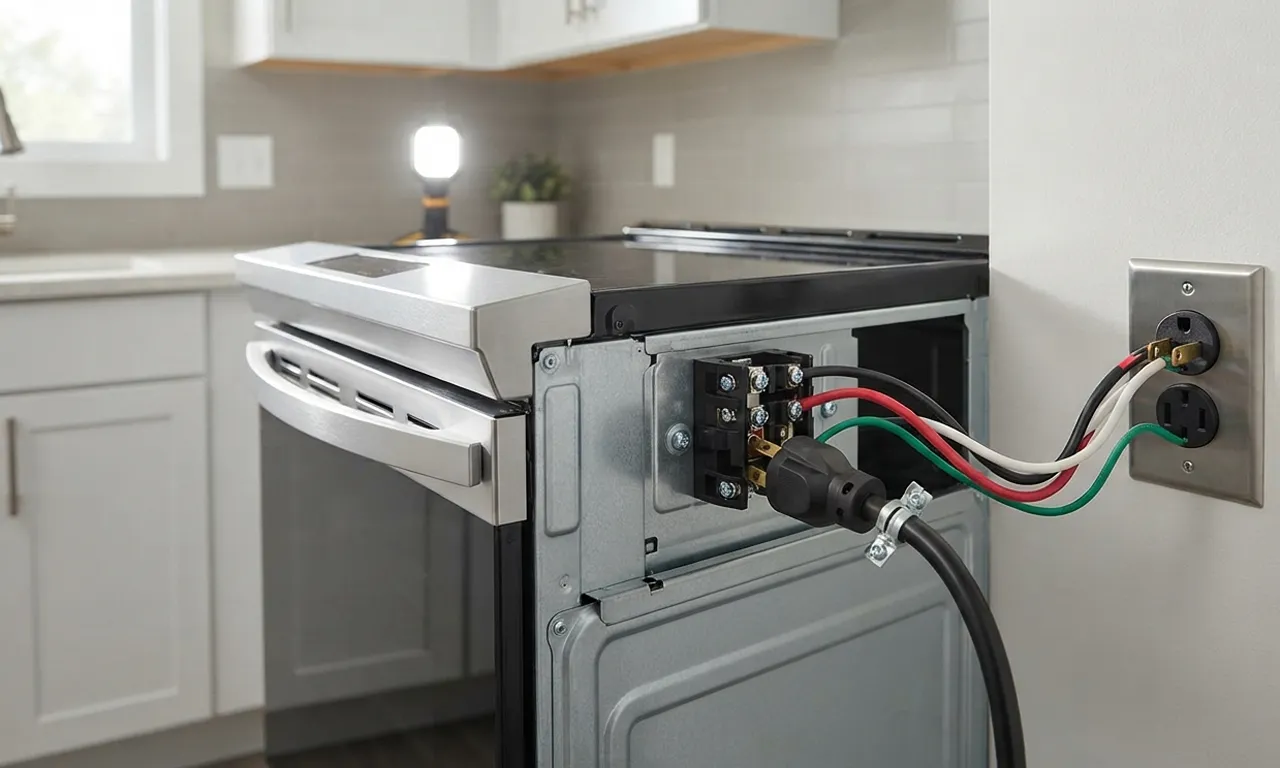
Extension cords are not designed for the high power draw of an electric range or cooktop. Using an extension cord can cause overheating, fires, and damage to your range. Your range must be plugged directly into a properly installed outlet on a dedicated circuit.
Range and Cooktop Wiring Requirements
Understanding the electrical requirements for ranges and cooktops is important for safe installation:
Electric Range Wiring
Electric ranges are freestanding units that combine a cooktop and oven. They require a dedicated 240-volt circuit with a 40-amp or 50-amp breaker.
Typical requirements: 40-50 amp breaker, 6-8 AWG wire, 240-volt circuit, NEMA 14-50 outlet (4-prong), dedicated circuit only for the range.
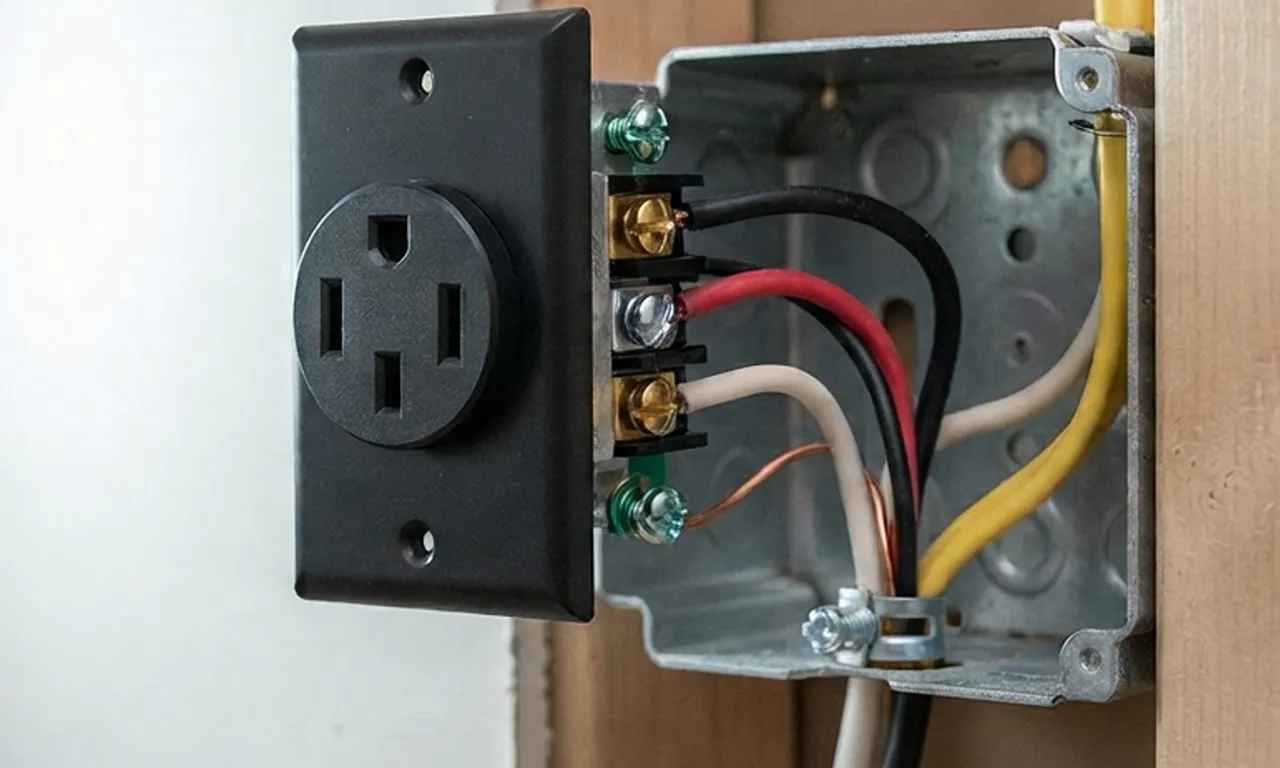
Modern requirement: 4-prong outlet with dedicated ground (NEMA 14-50).
Electric Cooktop Wiring
Cooktops are built-in surface units without an oven. The oven is installed separately. Cooktops require a dedicated 240-volt circuit, typically 30-50 amps depending on the model.
Typical requirements: 30-50 amp breaker, 8-6 AWG wire, 240-volt circuit, hardwired or outlet connection depending on model.
Installation note: Cooktops are often hardwired directly to the circuit rather than using a plug and outlet.
Wall Oven Wiring
Wall ovens are built-in ovens installed separately from the cooktop. They require a dedicated 240-volt circuit, typically 30-50 amps depending on the model.
Typical requirements: 30-50 amp breaker, 8-6 AWG wire, 240-volt circuit, hardwired connection.
Installation note: Wall ovens are almost always hardwired directly to the circuit.
Our Range and Cooktop Wiring Process
When you hire us for range or cooktop wiring, we follow a careful process to ensure the work is done safely and correctly:
Assessment and Planning
We assess your range or cooktop needs and determine the right circuit size, wire gauge, and outlet type. We check your panel capacity and plan the wiring route from the panel to the appliance location.
Provide a Clear Estimate
We give you a written estimate that includes all costs for materials, labor, and permits. We explain the work involved and answer any questions you have. You know exactly what you are paying for before we start.
Handle Permits
We obtain all necessary permits for your range wiring. We coordinate with the city or county to ensure all work meets current electrical codes. You do not have to worry about compliance or paperwork.
Install the Circuit and Outlet
We run the appropriate wire from the panel to the range or cooktop location, install the correct breaker, and install the proper outlet or hardwired connection. We ensure all connections are secure and properly torqued.
Test and Verify
We test the new circuit to ensure proper operation and safety. We verify the voltage is correct, the breaker holds under load, and the outlet is properly wired. We coordinate final inspections to close out permits.
3-Prong vs. 4-Prong Range Outlets
Understanding the difference between 3-prong and 4-prong range outlets is important for safety and code compliance:
3-Prong Range Outlet (Old Style)
3-prong range outlets have two hot wires and one neutral wire, with no dedicated ground wire. They were common in homes built before 1996. While they still work, they are not as safe as 4-prong outlets because they lack a dedicated ground connection.
Specifications: 240 volts, 40-50 amps, NEMA 10-50 outlet, 3 conductors (2 hot, 1 neutral), no ground wire.
Safety concern: Without a dedicated ground, the neutral wire serves both as the neutral return path and the ground. If the neutral connection fails, the range casing can become energized, creating a shock hazard.
4-Prong Range Outlet (Modern Standard)
4-prong range outlets have two hot wires, one neutral wire, and one dedicated ground wire. They are required by modern electrical codes and are much safer than 3-prong outlets because they provide a dedicated ground path.
Specifications: 240 volts, 40-50 amps, NEMA 14-50 outlet, 4 conductors (2 hot, 1 neutral, 1 ground), dedicated ground wire.
Safety benefit: The dedicated ground wire provides a safe path for fault current, reducing the risk of shock if a fault occurs in the range.
Upgrade to 4-Prong for Safety and Code Compliance
If your home has a 3-prong range outlet, upgrading to a 4-prong outlet provides a dedicated ground connection that significantly improves safety. The ground wire provides a safe path for fault current, reducing the risk of electrical shock. Modern electrical codes require 4-prong outlets, and newer ranges are designed for them. Upgrading your outlet is a simple safety improvement that protects your family.
Need range or cooktop wiring in Round Rock? Call us for a free estimate and professional service.
Why Choose Our Electricians for Range Wiring
Licensed and Insured
All our electricians are fully licensed in Texas and carry liability insurance. Range wiring involves 240-volt electricity and heavy-gauge wire, requiring professional expertise.
Code Compliance
We ensure your range wiring meets all current electrical codes. We handle permits and inspections so you do not have to worry about compliance.
Proper Sizing
We install the correct breaker size, wire gauge, and outlet type for your range or cooktop. Proper sizing is essential for safety and performance.
Quality Materials
We use high-quality wire, breakers, and outlets that meet current codes. We do not cut corners on materials because your safety depends on the quality of the installation.
Local Knowledge
We know Round Rock homes and the requirements for range wiring. We understand local codes and inspection processes.
Warranty Protection
We stand behind our work. Your range wiring is backed by our workmanship guarantee. If anything is not right, we come back and make it right at no additional cost.
Serving All Round Rock Neighborhoods
We provide range and cooktop wiring services throughout all Round Rock neighborhoods including Teravista, Forest Creek, Brushy Creek, Old Town Round Rock, Paloma Lake, Walsh Ranch, Cat Hollow, Sendero Springs, Stone Canyon, Behrens Ranch, University Heights, Mayfield Ranch, Downtown Historic District, Chisholm Valley, and all surrounding communities.
If you need a range or cooktop wired, call us today for a free estimate and professional service.
Frequently Asked Questions About Range and Cooktop Wiring in Round Rock
Electric ranges typically need a 40-amp or 50-amp dedicated 240-volt circuit. The specific size depends on the range's power requirements. Most modern electric ranges require a 50-amp circuit, while some older or smaller ranges may use 40-amp circuits.
A range is a freestanding unit that combines a cooktop and oven in one appliance. A cooktop is a built-in surface with burners only, while the oven is installed separately elsewhere in the kitchen. Both require dedicated circuits, but the wiring requirements can differ.
The cost of range wiring depends on the distance from the panel, the circuit size, and the complexity of the installation. We provide a free, written estimate before starting any work so you know the exact cost upfront. No hidden fees or surprises.
For a 40-amp circuit, 8 AWG wire is typically used. For a 50-amp circuit, 6 AWG wire is required. The wire size must match the circuit breaker size and the range's power requirements. We calculate the correct wire size for your specific range.
Modern electrical codes require 4-prong outlets for electric ranges. 3-prong outlets were used in older homes but lack a dedicated ground connection. If you have a 3-prong outlet, we recommend upgrading to a 4-prong outlet to meet current code and improve safety.
Yes. Range wiring requires permits in Round Rock and Williamson County. Our electricians handle all necessary permits and inspections for the work we perform, so you do not have to worry about compliance.
A typical range wiring installation takes 2 to 4 hours, depending on the distance from the panel and the complexity of the installation. We work efficiently to complete the installation and minimize disruption to your home.
We strongly advise against installing range wiring yourself. It involves working with high-voltage 240-volt electricity and heavy-gauge wire. Incorrect installation can cause electrical fires, shocks, and damage to your range. Always hire a licensed electrician.
Range and Cooktop Wiring Available Across Round Rock, TX
We provide range and cooktop wiring services to every neighborhood in Round Rock and the surrounding areas.
Ready to Schedule Your Range and Cooktop Wiring in Round Rock?
Our licensed electricians are standing by. Call now for fast service or fill out our free quote form and we will get back to you quickly.